

WATER HEATERS
All homes have some sort of water heating system, be it gas, electric, or tankless. And unfortunately, none of them last forever. Most standard water heaters have an average life span of anywhere from 12-15 years, give or take. You will know it is time for replacement when one of several things happen: a lack of hot water, a leaking water heater, or possibly rust-colored water. And when it comes time for replacement, we are the first call you should make.
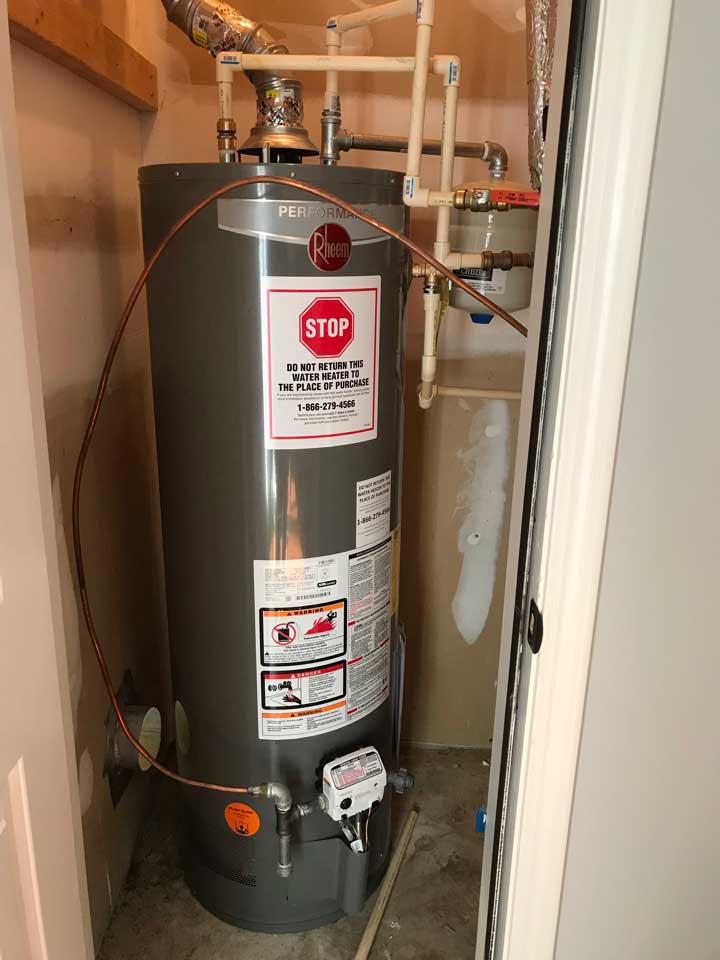
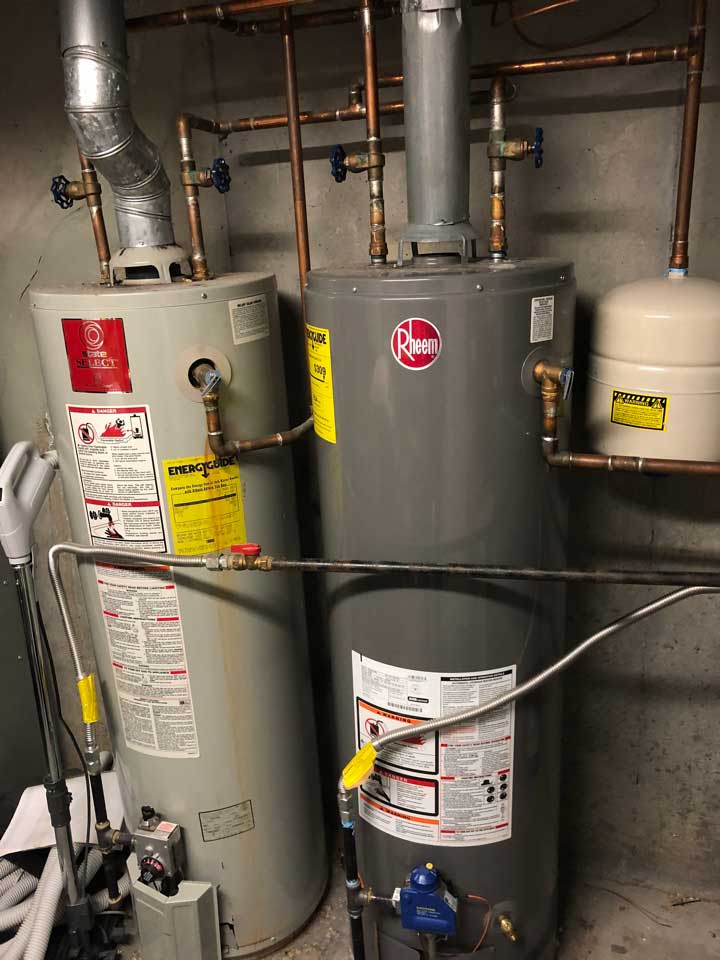
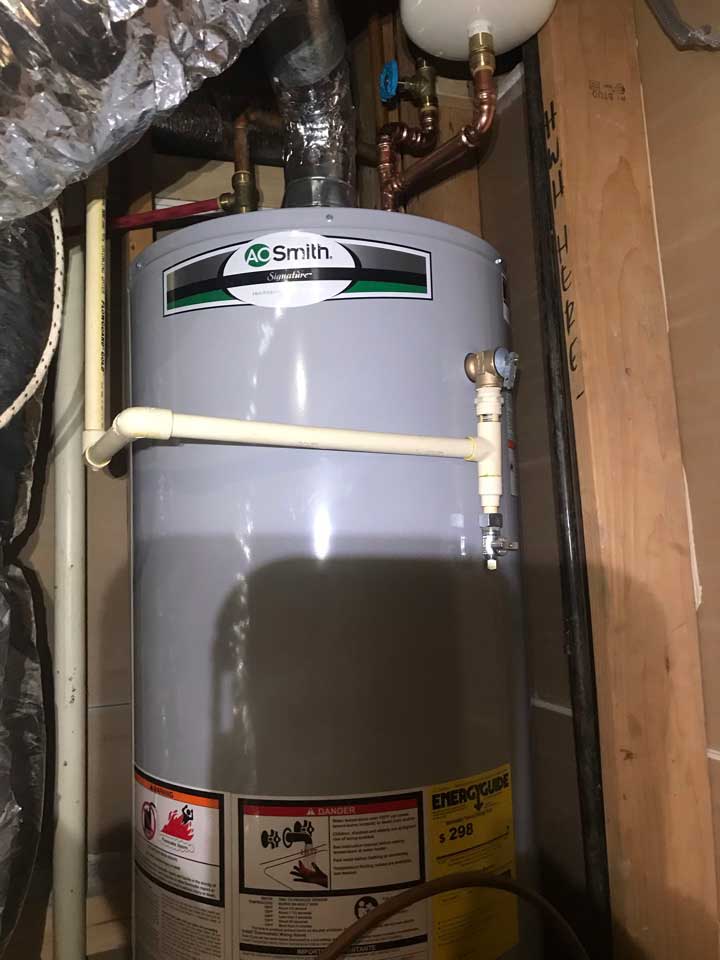
Gas water heaters operate via natural gas (or sometimes propane). They use a burner to heat up the tank of water to an adjustable temperature, usually no more than 125 degrees. Gas water heaters have a fast recovery rate, meaning that once all the hot water from the tank is depleted, they can quickly heat up a full tank again, allowing for more fixtures to be used at once (shower, dishwasher, etc.). Gas water heaters produce combustion, so they have a vent at the top to channel all spent hot gases away from the unit itself.
Electric water heaters function by using two thermostats located on the side of the tank to heat up two elements within the tank. These elements get red hot, heating all the water inside. The thermostats are adjustable to 125 degrees in most cases. Electric water heaters do not require a vent, so they can be installed in a wider variety of spaces. They have a slower recovery rate than gas water heaters, however, so they are not without flaws. Either system will function in any home built for them, and both have roughly the same life span. All sizes are available, from small, 10-gallon units to large scale 100-gallon units and everything in between.
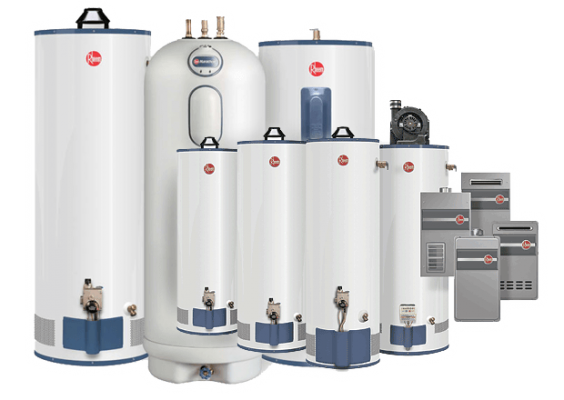
Tankless water heaters are a relatively new concept to the U.S., having been popular in Japan and Europe for years. Tankless water heaters occupy a very small area, averaging about the size of a small suitcase, and are wall-mountable. They use (on most units) a combination of gas and electricity to operate, and are much more efficient than standard water heaters. They operate cleanly and quietly, and require little to no maintenance. They can be installed inside or outside, and as such, have different venting requirements than tank-type heaters. They also are available with an optional wall-mounted keypad to adjust temperature. All this new technology and convenience comes with a price (literally) however, averaging between roughly three to five times as much as a standard water heater installation. The wait for hot water is also a bit longer due to the design of the unit. They do have a 25-year average lifespan however, with a standard 10-year warranty.